


Aphantasia and Cross-Sensory Aphantasia: Not Everyone Experiences the Mind the Same Way

If someone asks you to close your eyes and picture a beach, what happens?
Some people can see a clear image in their mind. They may picture the waves, the sand, and the sky. Others may have a vague or blurry image. And some people may not see anything at all.
That difference is called aphantasia.
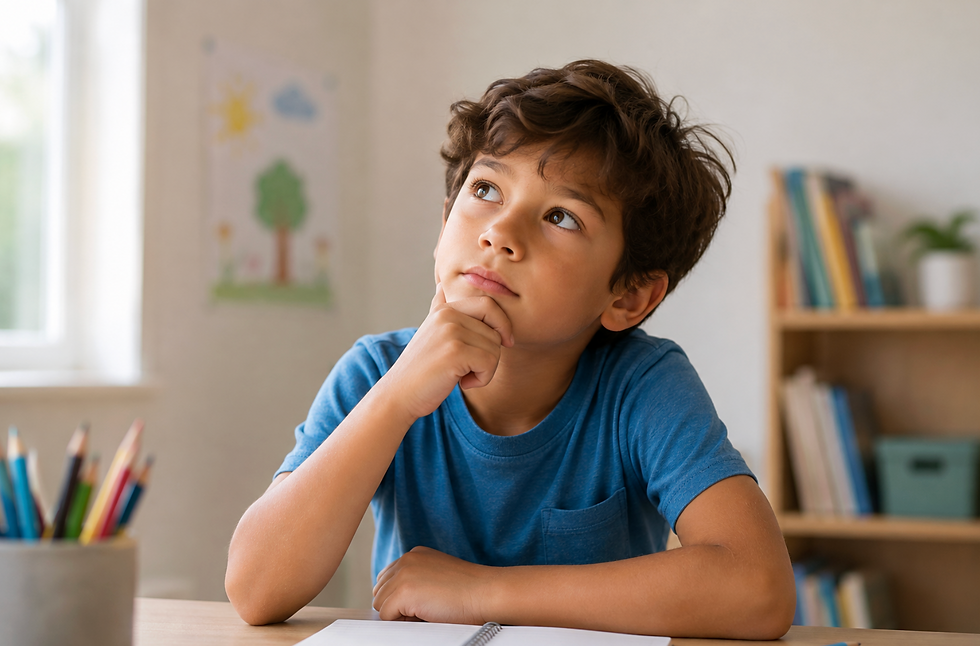
Aphantasia is not a diagnosis, disorder, or disability. It is a difference in how some people experience mental imagery. For people with aphantasia, the phrase “picture it in your mind” may not mean the same thing that it means for someone who experiences vivid mental images.
Understanding aphantasia can help us recognize something important: not everyone experiences their thoughts, memories, and imagination in the same way.
What Is Aphantasia?
Aphantasia is most often used to describe having little or no voluntary visual imagery. For example, imagine someone asks you to think about a red apple. Some people might see an image of a red apple in their mind. They may be able to imagine its shape, colour, and shine.
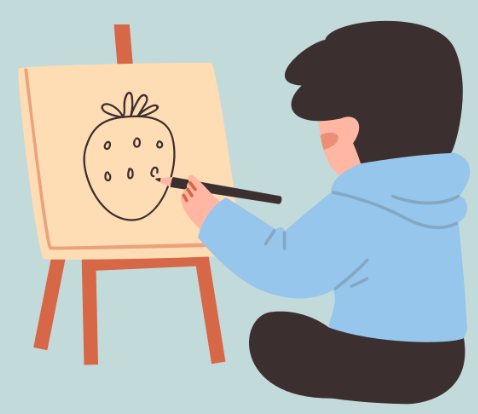
Someone with aphantasia may know what an apple is. They may know that it is red, round, and has a stem. However, they may not actually see an image of the apple in their mind.
This does not mean they do not have an imagination. It also does not mean they are less creative. People with aphantasia can still write stories, create art, solve problems, dream, remember information, and think deeply. They may simply use different ways of thinking and imagining.
For example, one person may imagine a character in a story by seeing the character's face in their mind. Another person may think about the character using words, facts, personality traits, or ideas without seeing a mental picture. Both are valid ways of thinking.
Aphantasia Is a Spectrum
Aphantasia is not always an all-or-nothing experience.
Some people may have no voluntary visual imagery. Others may have very faint, brief, or unclear images. Some people may be able to imagine certain things but not others.
For example, a person may be able to imagine a familiar place more easily than a person's face. Someone else may be able to see colours in their mind but not detailed images.
This is why it can be helpful to think of mental imagery as existing on a spectrum.
There is no one “right” way to experience mental imagery. People can have very different inner experiences, even when they use the same words to describe their thoughts.
What Is Cross-Sensory Aphantasia?
When people hear the word aphantasia, they often think only about visual imagery. However, imagination and mental recall can involve more than pictures.
Our minds can also imagine or recall experiences involving:
Sounds
Smells
Tastes
Touch
Movement
Physical sensations
Some people with aphantasia may have differences in only one type of mental imagery. For example, they may not be able to picture a friend's face, but they can imagine the sound of that friend's voice. Others may have differences across several senses. This can be described as cross-sensory aphantasia or reduced imagery across multiple sensory experiences.
For example, someone may:
Know what their favourite song sounds like without being able to “hear” it in their mind
Remember that a food tastes sweet without being able to imagine the taste
Know what a loved one's perfume smells like without being able to mentally recreate the smell
Remember being hugged without being able to imagine the physical sensation of the hug
Again, this does not necessarily mean that the person has poor memory or does not understand the experience. They may simply remember information in a different way.
You Can Know Something Without Re-Experiencing It
This is an important part of understanding aphantasia.
A person does not need to see, hear, smell, taste, or feel something in their mind in order to know about it. For example, someone may know exactly what their childhood home looked like without being able to create a mental picture of it.
They may know:
How many bedrooms it had
Where the kitchen was located
What colour the front door was
Which room they slept in
They have the information. They may just not experience that information as an image in their mind.
The same can be true across other senses. Someone might know that their grandmother's voice was soft without being able to hear her voice internally. They may know that cinnamon smells strong without being able to recreate the smell in their mind.
Knowing and mentally experiencing are not always the same thing.
A Neuroaffirming Way to Understand Aphantasia
A neuroaffirming approach recognizes that brains do not all work in the same way. There is a wide range of differences in how people think, learn, remember, imagine, and process information. Aphantasia is one example of this human diversity. The goal should not be to assume that a person needs to “fix” their aphantasia. Instead, we can become curious about how that person's mind works.
We can ask:
How do you think about the past?
How do you imagine the future?
How do you remember important information?
What happens when someone asks you to visualize something?
Are there certain types of information that are easier or harder for you to remember?
What strategies help you learn and plan?
These questions allow us to learn about a person's individual experience instead of making assumptions.
Why Can Understanding Aphantasia Be Helpful?
Aphantasia may not cause difficulties in daily life for many people. Others may notice challenges in specific situations.
For example, some common advice assumes that everyone can create mental images.
Someone might be told to:
“Picture yourself succeeding.”
Or:
“Visualize the route before you leave.”
Or:
“Imagine your happy place.”
These strategies may be helpful for some people, but they may not be useful for someone who does not experience mental imagery in that way. This does not mean the person is not trying hard enough. It may simply mean that the strategy does not match how their brain works.
Instead, they may benefit from other approaches.
Supporting Aphantasia in Everyday Life

The best supports will depend on the individual.
A person with aphantasia may find it helpful to use:
Written notes
Lists and checklists
Calendars and reminders
Maps and GPS
Photographs
Diagrams
Voice notes
Technology and apps
Step-by-step instructions
Hands-on practice
Written descriptions
For example, instead of asking someone to visualize their route to a new location, they may prefer to use GPS. Instead of asking someone to remember what something looked like, it may be helpful to take a photo. Instead of relying on mentally replaying a conversation, someone may prefer to take notes. The goal is not to assume that every person with aphantasia needs accommodations. Many people have already developed strategies that work well for them. The most important step is to ask the person what helps.
Aphantasia and Creativity
One common misunderstanding is that people without mental imagery cannot be creative.
This is simply not true. Creativity can happen in many different ways. Some people create using mental pictures. Others use language, emotions, concepts, patterns, memories, movement, sounds, or experimentation. A writer may create a detailed world without seeing it in their mind. An artist may create something through observation and experimentation. A musician may understand music through patterns, movement, or learned knowledge. A problem-solver may think through facts and relationships rather than mental images. There is more than one way to imagine. There is more than one way to be creative. And there is more than one way to experience a mind.

The Bottom Line
Aphantasia is not a diagnosis, and it is not automatically a disability or something that needs to be changed. It is a difference in how some people experience mental imagery. For some people, this difference may involve visual imagery only. For others, differences may extend across multiple senses, including imagined sounds, smells, tastes, touch, or movement. Every person's experience can be different.
A neuroaffirming approach means becoming curious rather than making assumptions. It means recognizing that people may think, remember, imagine, and experience their inner worlds in very different ways. Instead of asking, “Why can't you visualize this?”
We can ask:
“What is the best way for your brain to understand, remember, and imagine this?”
That question makes room for the many different ways people experience the world, and themselves.
At WonderTree
We understand that children do not all think, imagine, or learn in the same way. For a child with aphantasia, traditional instructions such as “picture this in your mind” may not be helpful, and that’s okay.
We can help children discover strategies that work with the way their brain naturally processes information. This might include using concrete examples, visual supports, written descriptions, hands-on activities, or other approaches that make information easier to understand and remember.
Our goal is not to change the way a child thinks, but to understand their individual strengths and provide the right tools to help them feel confident, capable, and supported.
For More Information:
Cleveland Clinic – Aphantasia — A medically reviewed, easy-to-understand explanation of aphantasia, including what it is, how it can present, and when to speak with a healthcare provider.
Aphantasia Network – What Is Aphantasia? — A highly accessible resource with explanations, personal experiences, research, and a short visualization questionnaire.
Aphantasia Network – So Your Child Can't Visualize? — Especially useful for parents. This article specifically discusses children who may have aphantasia, learning, school experiences, and ways parents can support them.
University of Exeter – Cognitive Neurology Research — Information from a leading research group studying aphantasia and mental imagery, including research led by Professor Adam Zeman.
Aphantasia Network – Resources for Educators — Helpful for parents who want to understand how aphantasia may affect classroom instruction and how educators can use alternatives to visualization-based strategies
#Aphantasia #MentalImagery #Neurodiversity #Neurodivergent #DifferentWaysOfThinking #DifferentWaysOfLearning #LearningDifferences #ChildDevelopment #CognitiveDiversity #BrainDifferences #UnderstandingAphantasia #MentalVisualization #VisualImagery #InclusiveLearning #NeurodiversityAffirming #ChildrensMentalHealth #Education #LearningSupport #ParentEducation #SupportingChildren #UnderstandingNeurodiversity #WonderTree #WonderTreeLearning #WonderTreeTherapy #EveryMindIsDifferent #BrainsWorkDifferently #IndividualStrengths #LearningInDifferentWays #SupportingNeurodivergentChildren
IMPORTANT: Information shared by WonderTree is not intended to replace or be constituted as clinical or medical care. It’s intended for educational purposes only. Each child is unique, and the information provided may not be applicable to your specific situation. If you need support, please establish care with a licensed provider so that they can provide tailored recommendations for you or your child. This blog is non-monetized.

Comments